LexShares Case #285: Riding the Rubber Band Craze
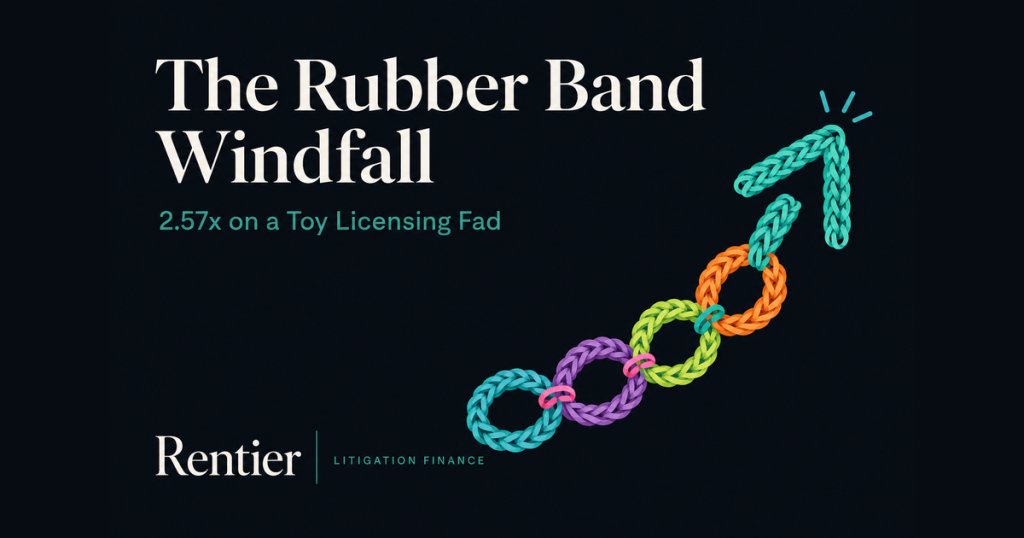
How a toy licensing dispute turned $25,000 into $64,135 in under 2 years
The Numbers
| Invested | $25,000 |
| Returned | $64,135 |
| Net Profit | $39,135 |
| MOIC | 2.57x |
| IRR | 66% |
| Holding Period | 682 days |
The Case
Remember when rubber band bracelets were everywhere? In 2013-2014, loom kits were the hottest toy in the market. How-to videos had millions of views on YouTube. All 30 best-selling toys on Amazon UK were loom-related. Celebrities like David Beckham and Kate Middleton were spotted wearing the colorful bands.
A small toy developer created a single-piece plastic loom and partnered with an “As Seen on TV” marketing company to scale distribution. The deal allegedly went sideways:
- The marketing partner failed to pay royalties on sales
- Sold unauthorized product variations beyond the agreed scope
- Launched competing products despite exclusivity provisions
- Failed to promote the plaintiff’s website on packaging as contractually required
Claimed damages exceeded $3 million.
Timeline
| Date | Event |
|---|---|
| Sep 2016 | Initial LexShares funding ($120K) |
| Jun 12, 2017 | My follow-on investment — $25,000 |
| Jun 2018 | Oral argument on summary judgment motions |
| Sep 2018 | Settlement conference — no resolution |
| Oct 2018 | Trial date set for late January 2019 |
| Feb 2019 | Court orders mediation |
| Apr 24, 2019 | Settled — 7 days before trial |
| Apr 25, 2019 | Received $64,135 |
Why It Worked
Follow-on funding is a positive signal. The plaintiff had already raised $120K through LexShares in 2016. Coming back for more funding meant the case was progressing well enough to justify continued investment. I was essentially getting validated deal flow.
Clear contractual breaches. Selling unauthorized products and launching competing products despite exclusivity provisions are straightforward contract violations — easier to prove than complex IP or fraud claims.
Trial pressure worked. The case settled 7 days before the May 2019 trial date. Defendants face mounting costs and uncertainty as trial approaches. Court-ordered mediation in February 2019 likely accelerated negotiations.
Consumer trend provided context. The rubber band bracelet craze was well-documented — millions of YouTube views, celebrity endorsements, Amazon bestseller lists. This made damages more credible than abstract business projections.
Return Breakdown
| Settlement | $300,000 |
| Fund Expenses | ($4,323) |
| Net to Fund | $295,677 |
| My Share (25%) | $73,919 |
| Carried Interest (20%) | ($9,784) |
| My Net Return | $64,135 |
Gross MOIC: 3.0x | Net MOIC: 2.57x | Net IRR: 66%
How I Found This Deal
LexShares never sent me a notification for this offering. I found it by randomly browsing their case portfolio. By the time my access request was approved, only 25% of the $100K round remained. I committed the full $25K and closed out the deal.
Lesson: Don’t rely solely on platform notifications. Check the deal flow manually.
What I Learned
Follow-on investments can be lower risk. When a plaintiff returns for additional funding, it signals case momentum. The initial investment already passed due diligence, and the case has progressed without collapse.
Consumer trends create provable damages. The loom craze was real and documented. When the market opportunity is obvious, it’s harder for defendants to argue the plaintiff wouldn’t have made money anyway.
Pre-trial settlements are common. Most cases don’t go to trial. The closer you get to trial, the more pressure both sides face. Court-ordered mediation often breaks logjams.
2.57x in 22 months is solid. Not the explosive 73-day returns of some cases, but 66% IRR beats most alternative investments. Patience matters in litigation finance.
This was my 5th LexShares investment. I stumbled onto it by browsing the platform — no notification, just luck. Sometimes the best deals aren’t the ones pushed to your inbox.
Commentary and personal experience — not investment, legal, or tax advice. Investing carries risk, including total loss of capital. Always do your own due diligence.